



CROSS OVER SKILLS
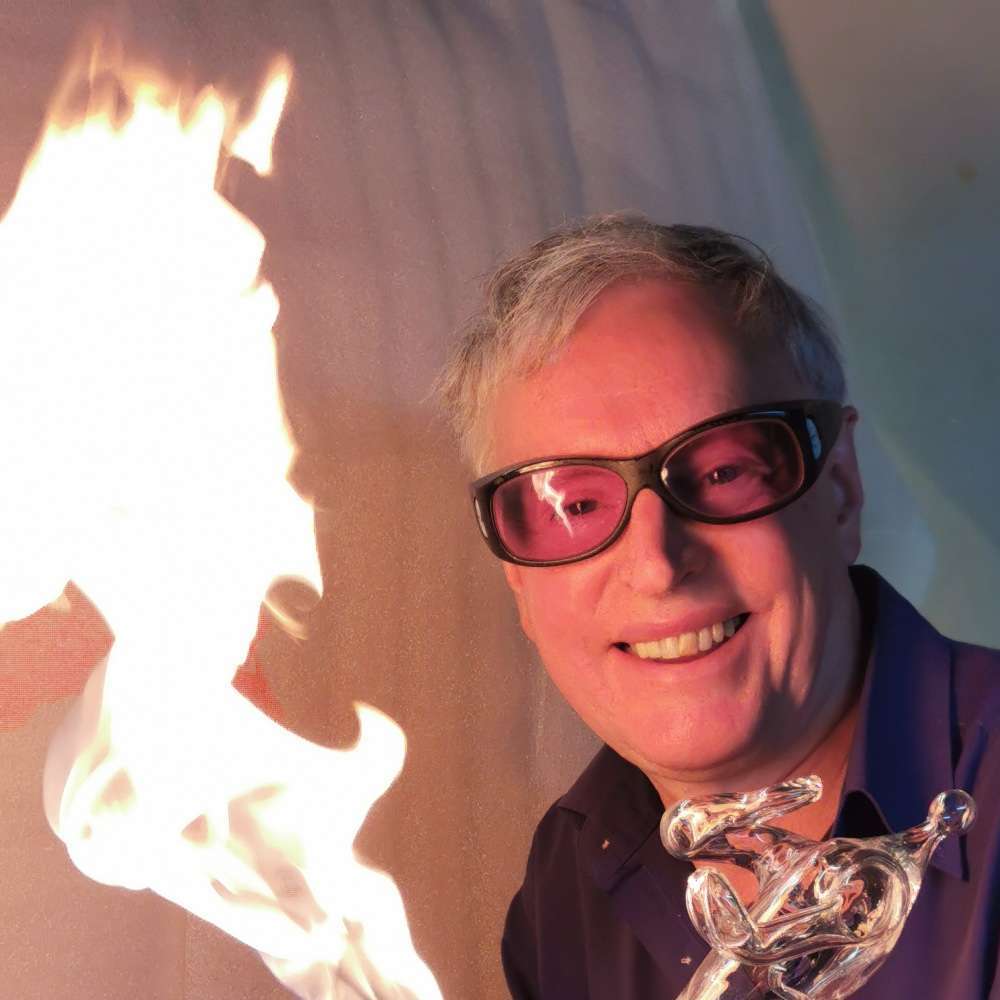
I am a scientific glassblower because I was rained as such. Trouble is I don’t make much scientific glassware now so should I be called something else? I have retired and am still making things out of glass. Most of it could be described as crafty or artistic. I make glass animals, glass candle holders, glass names all for craft fairs and art exhibitions. Not very scientific, is it?
Scientific glassblowers don’t have to be scientific. It is helpful if they are good with their hands and know how to manipulate glass tubing and rod in an open flame. Takes years of practice and if clever one gets to the stage when anything can be made from a combination of glass tubes and rods just by learning a few techniques. It’s a bit like playing the piano and using just a few notes to create a great symphony. Maybe it’s like playing football and not learning how to defend because all you want to do is score goals. If you are good at this and score more than your opponents who cares if you appear to be a one trick pony as long as you always win your games!
I was taught many techniques for making scientific glass ware for use in various laboratories. This glass apparatus was important for research and studies into all kinds of scientific disciplines such as medical, nuclear, and environmental. I didn’t plan to turn a test tube into an abstract sculpture but that’s what happened one day when my flame was set too hot and melted one part of a test tube to look like a strange beast. Gave me ideas to continue with this development and before not too long I found myself creating weird and wonderful creatures all from distorted test tubes. I sold each beast for ten times the amount I would have got if I had stayed loyal to my manufacturing of test tubes. Yet the techniques were almost identical so how come the results were so different.
Having a scientific approach to work is great if you work in that environment. A lot of techniques in makings scientific glassware is very precise with tolerances of less than one millimetre. It’s quite refreshing to break out of this straight jacket of a style to be free enough to make any shape without reason. To deliberately make something wrong, to break the rules and to ignore years of training is liberating.
The challenge with all lampworkings (heating glass in flame) processes is stopping stress build up to the point where the glass fractures. Doesn’t matter whether you are making a water still or an antelope the attention to detail on keep the glass warm is the same. What I find difficult is making the back legs of horses look like legs and not well made glass joints. The work has to flow, and the creator has to be artistic with their hands. Arms and bodies should move in sympathy and empathy with the actual glass being heated and as it becomes molten then the glass worker takes on a ballet persona to dance their way to perfection. Not many scientific glassblowers have this ability even though a lot are maybe drama queens and no strangers to stage work. They just can’t switch from technical work to artistic.
I believe it’s important to understand and appreciate how the material you work with behaves in all kinds of treatment. With lampworking this is vital in have something recognisable as an end result. You need to know how to heat up a glass rod, how to join two pieces of glass together so as to leave an invisible join and best of all you need how to anneal glass to reduce strain and thus potential for cracks. Who cares whether you end up with a complete distillation apparatus or a herd of glass candle holders as long as you don’t make a pig’s ear of it all!!!!!!!!! Regardless of whether you work in artistic glass or scientific don’t expect to create a fortune overnight!!!!!
0 Comments